
Your Data is a Strategic Asset

As data volumes grow and regulations evolve, maintaining control over where data resides, how it is managed, and who can access it has become a strategic business priority.

Your Data is a Strategic Asset

As data volumes grow and regulations evolve, maintaining control over where data resides, how it is managed, and who can access it has become a strategic business priority.

Keeping critical data, applications and services closer to the users and markets you serve improves performance, supports resilience and creates a stronger foundation for growth.
Data Centres and Digital Sovereignty

Why Data Sovereignty Matters

As you embrace cloud, AI, analytics and digital services, data increasingly moves across platforms, geographies and ecosystems. Without the right strategy, this can create challenges around governance, compliance, security and visibility.

A strong data sovereignty strategy enables you to protect critical information, meet compliance requirements, improve performance, and support digital innovation without compromising control.

Unlock the Value of Sovereign Data

Turn Data into a Strategic Advantage

Your data is a strategic asset. By maintaining greater control over how it is stored, managed and accessed, you can strengthen compliance, reduce risk and enable innovation across your business.

  1. Meet evolving compliance and regulatory requirements
  2. Reduce operational and security risks
  3. Improve governance and data visibility
  4. Accelerate cloud and AI initiatives
  5. Improve application performance and user experiences
  6. Increase visibility over critical business data
Partner with us
pexels-rdne-8292882 1
Integrity

Lorem ipsum dolr sit amet, coscet uradip iscing elit hend

Learn More
Vector - 2025-05-28T114450.348
Mask group - 2025-06-03T124355.029
Flexibility

Lorem ipsum dolr sit amet, coscet uradip iscing elit hend

Learn More
Vector - 2025-05-28T114450.348
pexels-fauxels-3183181 1
Client-First Mindset

Lorem ipsum dolr sit amet, coscet uradip iscing elit hend

Learn More
Vector - 2025-05-28T114450.348
pexels-pavel-danilyuk-8112091 1
Innovation

Lorem ipsum dolr sit amet, coscet uradip iscing elit hend

Learn More
Vector - 2025-05-28T114450.348
Mask group - 2025-06-09T183702.870
Reliability

Lorem ipsum dolr sit amet, coscet uradip iscing elit hend

Learn More
Vector - 2025-05-28T114450.348
In-Country Infrastructure You Can Point To
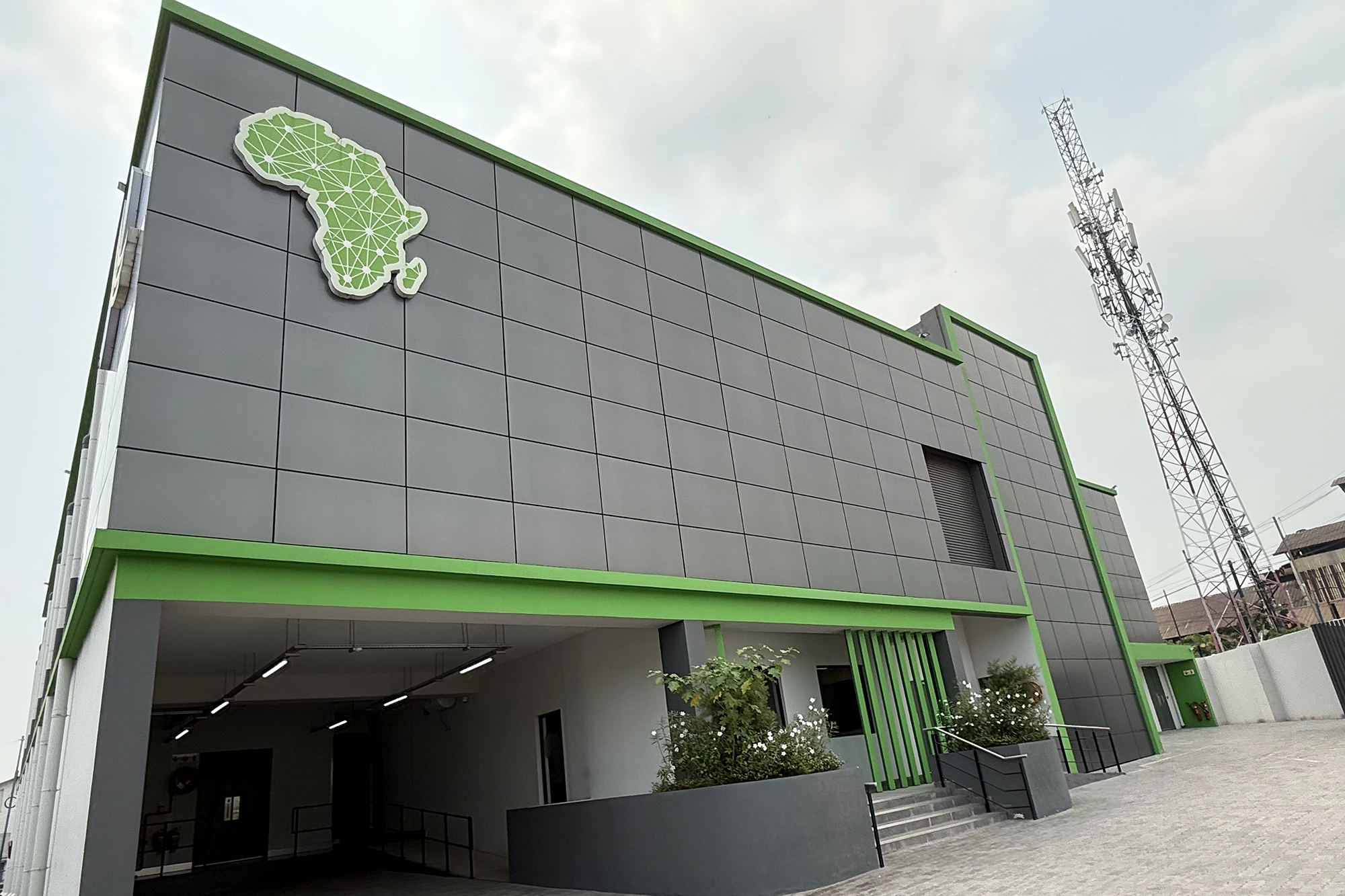
Digital sovereignty is not just a policy position, it depends on where your infrastructure physically sits. OADC operates 13 core data centres and more than 30 edge facilities across Nigeria, the Democratic Republic of Congo and South Africa, giving you carrier-neutral, in-country infrastructure in each market rather than a single regional hub serving all three.
South Africa Data CentresNigeria Data CentreDRC Data Centre
Meeting Africa's Growing Regulatory Requirements
Data protection regulation is tightening across the continent, from South Africa's POPIA to Nigeria's NDPR, alongside sector-specific requirements for financial services and government data.

Hosting data within the same country it is regulated in simplifies compliance considerably, removing the ambiguity of cross-border data transfer rules that can complicate audits, regulatory reporting and client due diligence.
Sovereignty Without Sacrificing Performance or AI Ambitions
Keeping data local has traditionally meant a trade-off against performance or innovation. OADC's private, carrier-neutral connectivity ecosystem removes that trade-off: colocated infrastructure connects directly to cloud providers, internet exchanges and networks on-site, and OADC's partnership with [AI] Analytics Intelligence extends this further, enabling African enterprises to train and deploy AI locally rather than routing sensitive workloads offshore.
{ "@context": "https://schema.org", "@type": "FAQPage", "mainEntity": [ { "@type": "Question", "name": "What is OADC?", "acceptedAnswer": { "@type": "Answer", "text": "OADC (Open Access Data Centres) is a pan-African data centre operator, part of the WIOCC Group, providing carrier-neutral colocation and interconnection across Nigeria, South Africa and the Democratic Republic of Congo. OADC operates 13 core facilities and more than 30 edge data centres, built on an open-access model that gives carriers, cloud providers and enterprises equal access within each facility." } }, { "@type": "Question", "name": "What is the open-access data centre model?", "acceptedAnswer": { "@type": "Answer", "text": "Open access is an operating model where a facility brings together carriers, cloud providers, internet exchanges and enterprises within one environment, with no party given preferential or exclusive control over how others connect. It goes beyond carrier neutrality, which refers specifically to equal access for network carriers, by extending the same principle across the entire digital ecosystem." } }, { "@type": "Question", "name": "Who owns OADC?", "acceptedAnswer": { "@type": "Answer", "text": "OADC is part-owned by ten major African telecom operators, African Capital Alliance, and the International Finance Corporation (IFC), an ownership structure that reflects the shared-access principle behind its facilities." } }, { "@type": "Question", "name": "What is the difference between carrier neutral and open access?", "acceptedAnswer": { "@type": "Answer", "text": "Carrier neutral means a facility gives equal access to multiple network carriers rather than favouring one. Open access is the broader model, extending that same equal-access principle to cloud providers, internet exchanges and enterprises as well as carriers." } }, { "@type": "Question", "name": "How many data centres does OADC operate?", "acceptedAnswer": { "@type": "Answer", "text": "OADC operates 13 core data centres and more than 30 edge facilities across Nigeria, South Africa and the Democratic Republic of Congo." } }, { "@type": "Question", "name": "Where are OADC's data centres located?", "acceptedAnswer": { "@type": "Answer", "text": "OADC has facilities in Lagos, Nigeria; Kinshasa, DRC; and eleven locations across South Africa, including Johannesburg, Cape Town, Durban, East London, Bloemfontein and Gqeberha." } }, { "@type": "Question", "name": "Is OADC's Nigeria data centre carrier-neutral?", "acceptedAnswer": { "@type": "Answer", "text": "Yes. OADC Lagos is a fully carrier-neutral, Tier-III designed and ISO 27001 certified facility, and is also the Nigerian landing station for the Equiano subsea cable." } }, { "@type": "Question", "name": "Is OADC's DRC facility certified?", "acceptedAnswer": { "@type": "Answer", "text": "Yes. OADC Texaf – Kinshasa is the Democratic Republic of Congo's first data centre certified Tier-III by the Uptime Institute, and is also ISO 27001 certified." } }, { "@type": "Question", "name": "Are OADC's South African data centres resilient to load shedding?", "acceptedAnswer": { "@type": "Answer", "text": "Yes. OADC's South African facilities are engineered with redundant power infrastructure and backup systems designed to maintain operations through extended grid disruptions, including load shedding." } }, { "@type": "Question", "name": "What is colocation?", "acceptedAnswer": { "@type": "Answer", "text": "Colocation means placing your own physical servers and hardware in a secure, third-party facility, which provides the power, cooling, connectivity and physical security around your equipment while you retain ownership and management of the hardware itself." } }, { "@type": "Question", "name": "What is the difference between colocation and cloud hosting?", "acceptedAnswer": { "@type": "Answer", "text": "Colocation means housing your own physical hardware in a third-party facility, while cloud hosting means renting virtual computing resources from a provider with no physical hardware of your own to manage. Many organisations use both together, colocating steady, mission-critical workloads while using cloud for variable or unpredictable demand." } }, { "@type": "Question", "name": "Can moving servers out of the cloud save money?", "acceptedAnswer": { "@type": "Answer", "text": "Often, yes, particularly for predictable, high-utilisation workloads, since colocation shifts costs from ongoing usage-based cloud billing to largely fixed space, power and connectivity costs. Savings depend on workload pattern and are less certain for variable or spiky workloads, where cloud elasticity still adds genuine value." } }, { "@type": "Question", "name": "How much does colocation cost?", "acceptedAnswer": { "@type": "Answer", "text": "Colocation pricing is quoted per facility and scales with rack space, power draw, redundancy level and contract length, so there is no single fixed rate. The most accurate way to understand cost is a tailored quote based on your specific rack and power requirements." } }, { "@type": "Question", "name": "Does OADC provide access to international subsea cables?", "acceptedAnswer": { "@type": "Answer", "text": "Yes. OADC Lagos is the Nigerian landing station for the Equiano subsea cable, and OADC Durban is the landing point for the 2Africa cable into KwaZulu-Natal, one of only four 2Africa landing points on the South African coast." } }, { "@type": "Question", "name": "What is the Equiano subsea cable?", "acceptedAnswer": { "@type": "Answer", "text": "Equiano is a private subsea cable system built by Google, running approximately 15,000 kilometres along Africa's west coast with a design capacity of around 144 terabits per second. It lands directly at OADC Lagos, with WIOCC selected by Google as the official landing partner for Nigeria." } }, { "@type": "Question", "name": "What is OAfabric?", "acceptedAnswer": { "@type": "Answer", "text": "OAfabric is OADC's interconnection platform, extending the open-access model into virtual connectivity so clients can reach cloud providers and partners without needing a dedicated physical cross-connect for each relationship." } }, { "@type": "Question", "name": "Does OADC support AI and GPU workloads?", "acceptedAnswer": { "@type": "Answer", "text": "Yes. OADC has standardised cooling and power infrastructure at facilities such as Parklands to support higher-density AI and GPU workloads, and has partnered with AI Analytics Intelligence to develop sovereign AI infrastructure for African enterprises." } }, { "@type": "Question", "name": "What makes a data centre AI-ready?", "acceptedAnswer": { "@type": "Answer", "text": "An AI-ready data centre supports high-density power delivery, advanced liquid or hybrid cooling, low-latency interconnection and data sovereignty controls, requirements that go beyond what standard colocation infrastructure was originally designed for." } }, { "@type": "Question", "name": "What is data sovereignty?", "acceptedAnswer": { "@type": "Answer", "text": "Data sovereignty means keeping data storage and processing within a specific country or region's legal jurisdiction, an increasingly important requirement for AI applications and regulated industries handling sensitive data." } } ] }

Frequently Asked Questions

Position Your Business for Long-Term Success

Discover how a data sovereignty approach can help you strengthen compliance, improve performance and unlock new opportunities for growth.